

By Joe Nelson — Retired Air Force, Nelson Home Group Team Leader and Mortgage Loan Originator
The Kansas City First-Time Home Buyer Guide
How to Buy Your First Home in Kansas City
(and When You Shouldn’t)
Straight answers for first-time buyers on both sides of the state line, with the real numbers, from the team that closed 38 first-time buyer clients through 7 months of 2026.
By Joe Nelson, Retired Air Force, Nelson Home Group Team Leader and Mortgage Loan Originator
Last updated: August 2026
★★★★★ KC’s Highest Rated Real Estate Team on Google
The short answer: Buying your first home in Kansas City takes five things: a monthly payment you can actually live with (not just qualify for), cash on hand during the process (earnest money that gets credited back at closing, plus $1,300 to $1,600 in inspections and appraisal that don’t), a loan matched to your situation rather than the biggest one you can get approved for, an offer strategy built for a competitive market, and a team that walks you through all of it before you sign anything. This guide covers each one, including the situations where the right answer is to keep renting. Our team closes first-time buyers every week, our in-house mortgage team writes many of those loans, and I’ll tell you what actually happens, with the real numbers.

How I know this
I lead Nelson Home Group, Keller Williams KC North, the highest-rated real estate team on Google in the Kansas City metro by live five-star review count: 1,200+ five-star reviews you can verify right now, over $300 million in sales volume, RealTrends Verified production. I’m also a licensed mortgage loan originator (NMLS #2547018), so I can tell you whether to buy, keep renting, or wait, with each role and its compensation clearly disclosed. 38 first-time buyer clients closed through 7 months of 2026. Retired Air Force, born in Kansas City, licensed in Missouri and Kansas.
Free PDF Download
Take this guide with you
The whole guide in one clean 14-page PDF: the real payment numbers, what you actually need at closing, down payment assistance on both sides of the state line, the 10-step process, and the offer strategies we use to win.
Tell us where to send it and we will email your copy. The download link opens right here too.
Get the free guide
Rent, Buy, or Wait
Should you rent, buy, or wait in Kansas City right now?
Direct answer: Buy if you can hold a total monthly payment of roughly $1,600 or more with cushion left over, you plan to stay several years, and your income is stable. Keep renting if the payment math doesn’t work yet, and don’t let anyone talk you out of that. Wait and prepare if you’re close but your credit or savings need six to twelve months of work. In Kansas City in 2026, with 30-year rates holding in the mid-6% range all year and roughly 3% annual home price appreciation, neither panic-buying nor endless waiting is the smart play. And heading into 2027, we are not planning around rates dropping; they could just as easily rise. We build buyers’ payments on today’s numbers, not hoped-for ones, and the right answer comes from your numbers, not the market’s mood.
Here’s what those numbers look like in practice. These are FHA scenarios at 3.5% down using a 6.66% rate (the Freddie Mac weekly average as of this guide’s last update; rates move, and we refresh this table when they move meaningfully), with realistic Kansas City taxes and insurance:
| Purchase price | Principal and interest | Total monthly payment (with taxes, insurance, mortgage insurance) |
|---|---|---|
| $165,000 | ~$1,041 | ~$1,600 |
| $200,000 | ~$1,262 | ~$1,850 |
| $250,000 | ~$1,577 | ~$2,200 |
| $332,000 (KC median existing home) | ~$2,095 | ~$2,700 |
Taxes and insurance alone run about $500 a month on most Kansas City homes, closer to $300 in parts of the urban core. First-time buyers are consistently surprised by that line, and it’s the piece national calculators get wrong for our metro. One more line item in plain words: mortgage insurance. Put less than 20% down and the lender adds a monthly charge that protects them, not you; on FHA loans it’s called MIP and runs roughly $75 to $150 a month at these price points. It’s baked into every number in the table above, so there’s no surprise waiting, but you should know it’s there and that it’s part of why the payment is higher than the loan math alone suggests.

When I say keep renting
A young woman called me last week renting for around $700 a month on a fixed income. There is no honest loan scenario in this metro near that payment, and I told her so. Renting at $700 while a starter home costs $1,600 isn’t throwing money away. It’s the only responsible move until her income grows. If that’s you, keep renting, and let’s build the plan for what has to change first.
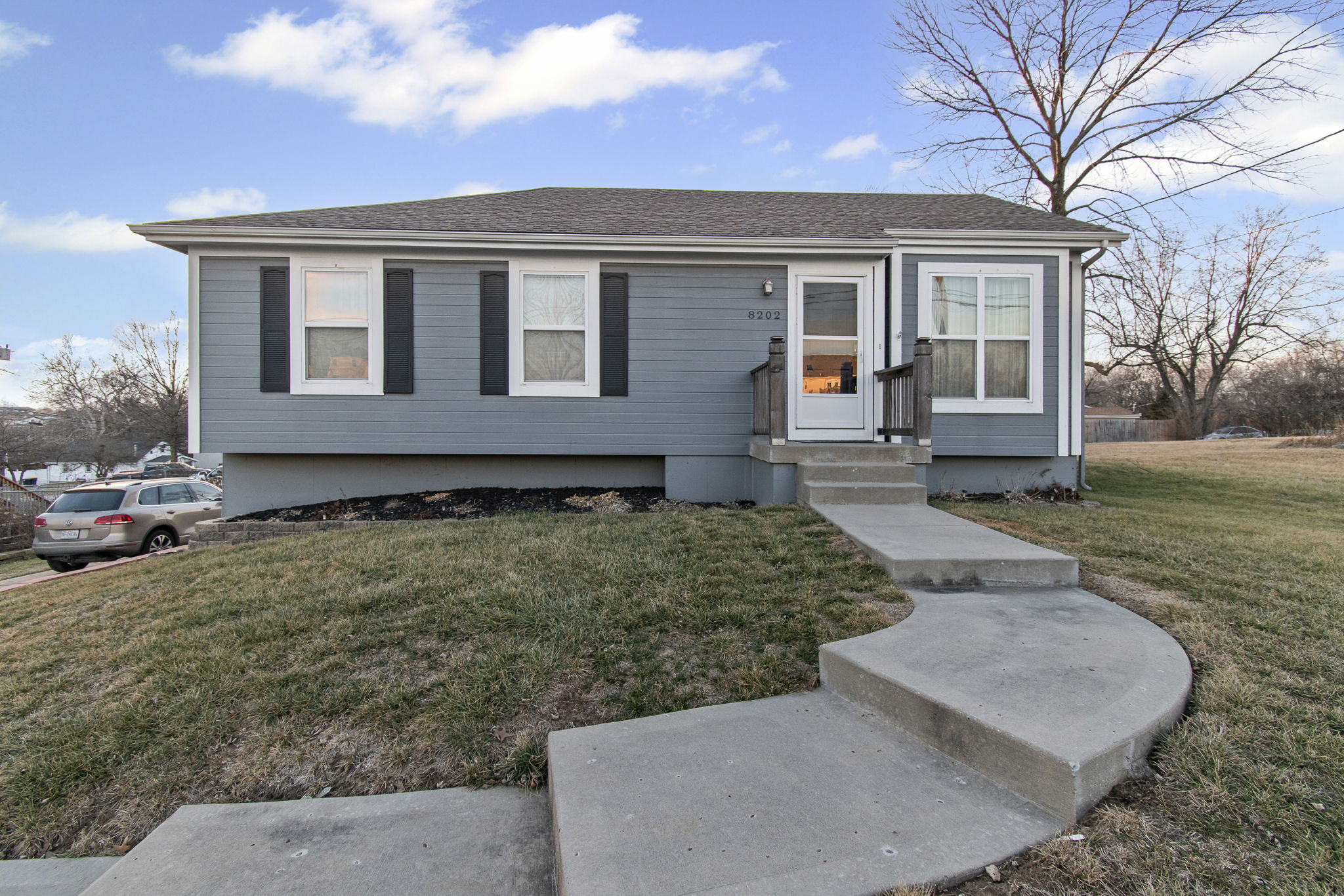
When waiting costs you
A buyer kept passing on $200,000 homes in Brookside and Waldo. Three years later, prices on those same homes had run up $40,000 to $50,000 and she was priced out entirely. I told her story to another buyer freezing the same way. She listened, bought, and is sitting on $20,000 to $30,000 of equity she’d have lost by waiting.

The PlayStation house hack
Early in my career a client barely qualified and literally sold his PlayStation to close. Eight years later the house has nearly doubled, his roommates cover most of the mortgage, and he’s built a couple hundred thousand dollars in equity. Fair warning: if a roommate leaves, the whole payment is yours, so this only works with a real vacancy cushion.
Joe’s Take
Waiting because the math says wait is wisdom. Waiting out of fear when the math already works cost one of my buyers $40,000 to $50,000 in equity. Run your numbers. Then act on them.
Is it cheaper to rent or buy in Kansas City right now? On pure monthly cash flow, renting is usually cheaper this year: metro rents commonly run under what a starter home costs per month. But here’s the part that decides it over time: with a fixed-rate mortgage, your principal and interest payment never goes up. Only taxes and insurance move. Rent has no such ceiling: it can rise every single year, and in a growing metro it eventually can price you out of the neighborhood you rent in. Owning locks the biggest line of your housing cost while renting leaves all of it exposed. It still only works if you stay long enough and the payment is comfortable from day one.
How long should I plan to stay? Several years at minimum. Closing out a sale honestly costs more like 7% to 8% of the price once you add it all up: commission (6% is common, and negotiable), title fees, the property taxes you settle at closing, and miscellaneous fees. At roughly 3% annual appreciation, that’s about two and a half years of growth just to break even. Leave sooner and you can lose money even in a rising market.
The Western Auto sign · Downtown Kansas City
The Real Cost Stack
How much money do you actually need to buy a first home in Kansas City?
Direct answer: During the purchase itself you’ll put out earnest money (typically 1% of the price on a resale home, and it gets credited back to you at closing) plus $1,300 to $1,600 for inspections and the appraisal, which you don’t get back. Then your down payment and closing costs come due at the end. Closing costs in Kansas City typically run $7,000 to $12,000, but sellers can pay some or all of them if we negotiate it, and down payment assistance exists on both sides of the state line. We often close first-time buyers who bring almost nothing to the closing table, and sometimes they even get some or all of their earnest deposit refunded to them. You do not need 20% down. You may not even need 3.5%.
Here’s the real cost stack, in the order the money leaves your account:
~1%
Earnest money · at contract
Not an extra fee. It’s part of your down payment, parked with the title company to show the seller you’re serious, and on resale it’s really never more than about 1%. New construction differs: a finished spec home still runs about 1%, but once custom selections start, builders typically require around 5%, nonrefundable. Most first-timers buy resale, so plan on the 1%.
$830–$930
Inspections · at inspection
$400 to $500 whole-home, $130 radon, $100 termite, $200 sewer scope. Skip what a house doesn’t call for and most buyers land between $500 and $750. But there’s a $15,000 story about that sewer scope in the mistakes section. Read it before you skip the $200.
$500–$700
Appraisal · 5 to 15 days in
Ordered by and paid to the lender after you’re under contract. It confirms the home’s value for your loan, and it is not a home inspection.
$7,000–$12,000
Closing costs · at closing
Lender fees, title work, prepaid taxes and insurance. Ask for a Loan Estimate at pre-approval for your real number. In many of our contracts we negotiate the seller to cover part or all of this.
0%–20%
Down payment · at closing, minus earnest money
VA and USDA can be zero down. FHA is 3.5%. Conventional first-time programs go as low as 3%. Twenty percent is a myth for first-time buyers; almost none of our 38 first-timer closings this year put 20% down.
A real closing table
What “almost nothing to the closing table” actually looks like
Earlier in my career I was a youth pastor, and one of the students from those days, Elizabeth, became a client years later when I helped her buy her first house. Recently her mom, Rebecca, decided it was her turn. Rebecca came to this country as a refugee, speaks limited English, and had never owned a home anywhere. She had good credit and steady income, but no savings for a down payment. We wrote the contract at $165,000, paired the loan with Missouri down payment assistance, negotiated $7,600 in seller-paid closing costs, and put down $1,600 in earnest money. When the dust settled, Rebecca got part of her earnest money back at closing instead of bringing a check. She went from a rental that wasn’t safe to a home she owns with a payment she’s comfortable with. There were tears at that closing table, and a couple of heated brother-and-sister arguments between Elizabeth and me on the way there. Worth it.
For the full cost breakdown with current examples, see our companion post: How Much Money You Need to Buy a House in Kansas City.
Can I really buy a house in Kansas City with no money down? With a VA loan (if you’re a veteran or qualifying service member) or USDA loan (in eligible areas), yes, the down payment can be zero, though you’ll still see upfront costs during the process. If you’ve ever served, check your VA eligibility before you look at anything else: our VA Home Buying Guide covers it.
Is earnest money refundable? Usually yes if you cancel within your inspection window under the standard contract, and the right to cancel survives even under Box 1 of the as-is addendum used in competitive offers (explained below). It can also be structured as nonrefundable on purpose to strengthen an offer, which is a strategy, not an accident.
Missouri Side vs Kansas Side
What down payment assistance actually exists in Kansas City, Missouri side vs Kansas side?
Direct answer: More than most first-time buyers think, and less free than most websites imply. Missouri’s MHDC programs offer a 4% forgivable second loan, but leave within 10 years and you repay whatever hasn’t yet been forgiven, and the assisted version carries a rate 0.25% to 0.50% higher. Kansas’s state program excludes Johnson County and Kansas City, Kansas entirely. The KansasDPA program is marketed as a grant but its own governing document requires full repayment if you sell or refinance within 30 years. There is no free money. There is useful money, if you know the terms going in.
Joe’s Take
There’s no such thing as free money. Best case: you make your own down payment, and we get the seller to cover your closing costs. If assistance is genuinely the difference between owning and not owning, I like it, and Rebecca’s story above is exactly that case. If you have another way, I usually encourage the other way.
One more market reality before the program details: the lower price points in this metro are seller’s markets, so a buyer who needs heavy assistance is often competing against buyers who don’t, and we plan our offer strategy around that.
Missouri side: MHDC
First Place (first-time buyers and qualified veterans): a below-market 30-year fixed first mortgage with an optional 100% forgivable second loan equal to 4% of the mortgage amount. Minimum score 640. KC area income limits: $113,400 for one to two person households, $130,410 for three or more. The fine print that matters: nothing is forgiven for the first five years. Starting in year six the balance forgives at 1/60 per month until it’s gone at year ten. Sell or refinance before then and you repay the remaining balance. The cash-assistance version prices 0.25% to 0.50% higher than the no-assistance version of the same program.
Next Step (first-time and repeat buyers): same 4% forgivable second and the same 10-year clock, income limits up to $136,080/$158,760. Next Step can pair with a Mortgage Credit Certificate worth up to $2,000 a year in federal tax credit; First Place cannot, whatever you read elsewhere, because MHDC’s own manual prohibits combining an MCC with its bond program. The part the program pages don’t lead with: in our experience Next Step’s assisted rates run well above the open market, and the repayment trigger includes refinancing, so you’re effectively locked into that higher rate for years. Most buyers who do that math with us end up passing.
The 10-year clock, honestly. Most first-time buyers don’t stay in their first house ten years. Selling costs roughly 7% to 8% between commission and seller closing costs, which at 3% appreciation is closer to two and a half years of growth just to break even, before you repay a dime of remaining assistance. Go in with your eyes open.
How you apply: through an MHDC certified lender, not through MHDC directly. We do these regularly.
Kansas side: read this part twice
KHRC First Time Homebuyer Program sounds incredible on paper: a 0% interest second loan of 15% to 20% of the price, up to $40,000, forgiven after ten years. What the blogs skip: it excludes Johnson County and the city limits of Kansas City, Kansas (plus Lawrence, Topeka, and Wichita), because those areas run their own federal HOME funds. It’s limited to 80% of area median income, requires at least 1% of your own funds, and the price cap in most counties is around $219,000, which rules out most of what’s for sale on the Kansas side of this metro. A real program, for a narrow situation.
KansasDPA advertises 3% to 4% assistance, no first-time requirement, 640 score. Two things its own documents say that its marketing doesn’t lead with. First, the public page calls the assistance “a non-repayable Grant,” while its Administrator’s Guidelines require full repayment if you sell, transfer, or refinance within thirty years, with a recapture notice recorded against the property at closing. Second, the assistance raises your rate: on the program’s own rate display in late August 2026, the same government loan priced at 6.375% with no assistance and 7.000% with 4% assistance. I’ve never closed a KansasDPA loan, because once you price the higher rate over the years you’ll actually own the home, it almost never pencils. Our mortgage team runs that comparison for every Kansas buyer who asks.
Wyandotte County: Build WyCo offers up to $21,000 through the Federal Home Loan Bank’s Affordable Homeownership Program for lower-income households (5-year retention agreement), and up to $1,500 in closing cost help through Capitol Federal in qualifying census tracts. Funding changes, so confirm before you plan around it.
Both sides of the state line
Chenoa Fund
Down payment assistance paired with FHA loans, sized at 3.5% or 5% of the price (the 3.5% version covers the entire FHA minimum down payment), minimum 600 score, no income limits, no first-time requirement. Two flavors, and the difference matters: the repayable version is a true second mortgage with a monthly payment at a rate 2% above your first, while the forgivable version is a 0% second with no payment, forgiven after 36 consecutive on-time payments (3.5% version) or 120 payments (5% version). Miss the details and you’ve signed up for a second house payment you didn’t expect. For buyers who don’t fit the state programs’ income limits, this is sometimes the tool that works.
First Federal Bank of Kansas City
A grant of up to $15,000 for first-time buyers at or below 80% of area median income (about $62,400 for one person, $89,100 for four) in Johnson and Wyandotte counties in Kansas and Cass, Clay, Jackson, and Platte counties in Missouri. Score above 620, two years of work history, homebuyer education class. Notice what this one covers: Johnson County and KCK, the exact areas the state program excludes. That’s the kind of matching a program list can’t do for you.
The bottom line on all of it: the right program depends on your income, your credit, your county, and how long you’ll realistically stay. That’s a matching problem, not a ranking problem, and it’s precisely the conversation my dual license exists for. We’ll run your actual numbers across the real options, including the option of no assistance at all.
Do I have to be a first-time buyer to get help? No. KansasDPA and Chenoa have no first-time requirement, MHDC Next Step takes repeat buyers, and MHDC waives the first-time rule for qualified veterans and in targeted areas.
Is down payment assistance free money? No. Every program in this section is either repayable on exit, forgiven only after years of occupancy, or priced into a higher rate. Useful, sometimes decisive, never free.
The Process, Step by Step
How does buying your first home in Kansas City actually work, step by step?
Direct answer: From pre-approval to keys is typically 30 to 45 days once you’re under contract, and the searching phase before that takes as long as it takes. The sequence: consultation, pre-approval, search, offer, earnest money, inspections (usually 10 days), appraisal, underwriting, final walk-through, closing. If assistance programs are in your file, build in extra time. The most important step is the first one, and it’s the one most buyers skip: a real consultation before you look at a single house.
Buyer consultation. We sit down before anything else and walk the whole process: what money you’ll owe and when, loan options, how offers work, how multiple offers work. I’ve done this for every buyer for my entire career. If an agent’s version of this step is “sign here and I’ll show you the house,” that’s a red flag, and you should hear it as one.
Pre-approval, before you shop. It tells us your real price range, which programs fit, and what your payment looks like, and it means we can write an offer the day you find the house. Pre-approval is free, commits you to nothing, and takes a short application plus documents you already have: recent pay stubs, W-2s or tax returns, bank statements, ID. Some of our lender partners can start with a soft credit pull that doesn’t touch your score.
Search and showings. Your buyer specialist sets up the search, shows you everything you want to see (our listings or anyone’s), and gives you the market analysis on anything you get serious about.
Offer and negotiation. Price, earnest money, closing date, seller-paid closing costs, home warranty, inspection terms. The seller accepts, declines, or counters; once everyone signs, it’s binding.
Earnest money deposited. Typically 1% to 5%, and it counts toward what you owe at closing.
Inspections, usually within 10 days. You end the window with one of four moves: accept as-is, renegotiate, request repairs, or cancel. After inspections are resolved, the contract firms up considerably.
Line up homeowner’s insurance before the inspection window closes. Most buyers get this wrong. If the roof turns out to be uninsurable, hail damage and multiple shingle layers being the usual Kansas City culprits, you want to know while you can still act on it. After inspections are negotiated, an uninsurable roof is no longer grounds to walk.
Appraisal. Ordered by the lender, $500 to $700, usually 5 to 15 days after contract.
Underwriting to clear-to-close. The lender verifies everything. Your job: change nothing. No new cars, boats, furniture on credit, or new credit cards. I have watched large purchases un-qualify buyers days before closing. If you must buy something big, call your lender first.
Final walk-through and closing. We verify the house is in the agreed condition, you review the Closing Disclosure (you get it at least three business days early), sign, fund, and get your keys.
A local note on inspections
In Kansas City we treat the whole-home inspection like a physical with your doctor: the generalist looks at everything, and if something concerns them, they refer you to a specialist, a structural engineer, an electrician, a plumber, a sewer camera. We don’t send specialists to every house, we send them when the inspector or the seller’s disclosure gives us a reason. What the generalist runs and which add-ons we push hard, radon, termite, and always the sewer scope, is covered in the cost section above.
How long does the whole thing take? Thirty to 45 days from accepted contract to keys is normal here. With down payment assistance in the file, plan longer and build the timeline into the offer.
Missouri side or Kansas side? For the buying process itself, there’s little difference; both states require signed buyer agency, and we’re licensed in both. The real differences are taxes, price points, and inventory, and if you’re moving from out of the area, start with our Kansas City Relocation Guide.
Downtown Kansas City at night
Winning in Multiple Offers
How do you win a house as a first-time buyer when there are other offers?
Direct answer: You win with terms, not just price: a short inspection window with the inspector already booked, the right box checked on the In Its Present Condition Addendum, appraisal-gap cash you can prove, underwriting done before you offer, and earnest money structured to show commitment. We’ve closed first-time buyers in multiple-offer situations using every one of these, sometimes with a one-day inspection period. What you should almost never do is waive inspections entirely, and I’ll show you why with real numbers.
One thing before the list: you don’t need all of these, and every deal is case by case, with options beyond this list when the situation calls for them. These are the levers that make an offer more appealing to a seller, and you pull only the ones you’re comfortable with. Our job is to educate you on the options. The decision is always yours.
Be ready before the house hits the market. Pre-approval done, search alerts on, and when it’s right, we’ve written offers before the first showing wave.
Shorten the inspection window instead of skipping it. The standard is 10 days. We have written one-day inspection periods with the inspector booked for the next morning before the offer went out. The seller reads that as near-certainty, and you still get your inspection.
Know the In Its Present Condition Addendum before you need it. It comes up constantly in KC multiple-offer situations, and there are three boxes. Box 1, the one we use most: you still inspect and can still cancel, you just waive renegotiation, take it or leave it. Box 2: inspections are informational only, no renegotiating, no canceling; built for investors scoping a rehab, and I don’t recommend it for first-time buyers. Box 3: no inspections at all.
About Box 3. In the 2021 and 2022 frenzy, waiving inspections was common, and I had a first-time buyer in Johnson County who refused to do it, on principle, on every offer. He never got a house; he’s still renting by his own choice. The strange math of those years: buyers would pay $40,000 over list without blinking but wouldn’t waive inspections, when short of a catastrophic foundation problem, most repair lists come in under $20,000. I’m not telling you to waive inspections; our standard play is Box 1 with a short window. I’m telling you to decide with numbers instead of fear, in both directions.
Cover the appraisal gap in writing. Offer to pay a stated amount of cash above appraised value, with proof of funds attached. It converts your strong price from a promise into a commitment.
Get underwriting done first. Full loan approval before the offer, delivered to the seller, beats a pre-approval letter from a stranger.
Structure the earnest money. A larger refundable deposit (1% to 2%) held at the title company as usual, or a smaller nonrefundable one ($500 to $1,000) released directly to the seller on signing, each tells the seller you’re not going anywhere.
Five of our first-time buyer wins, written up in full:
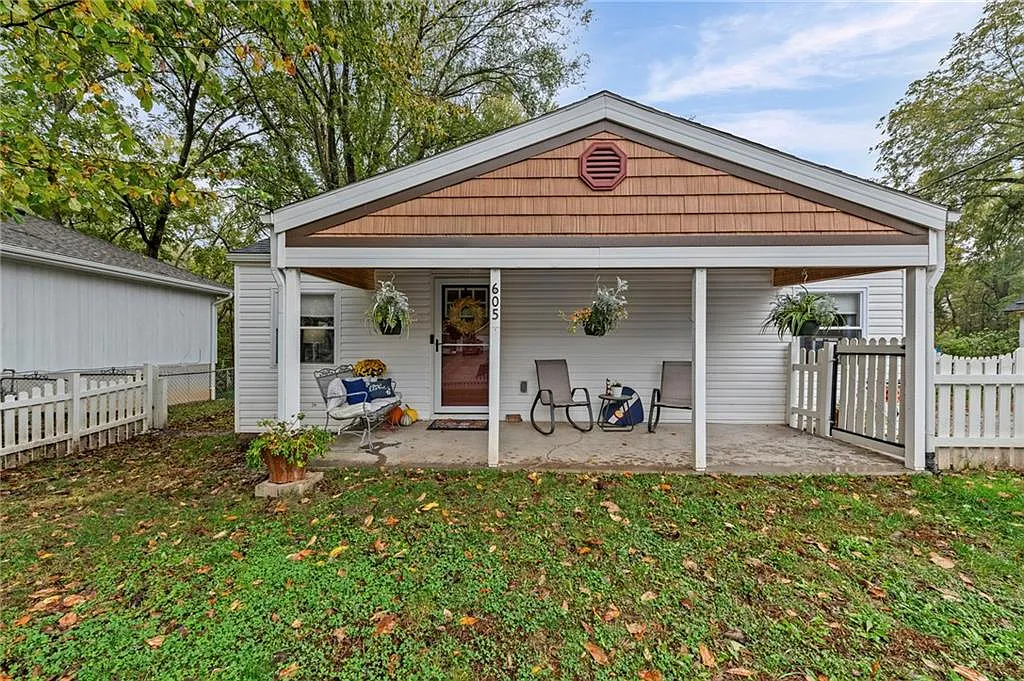 Multiple offers in Lee’s SummitHow a first-time buyer beat the crowd in a competitive market.
 An FHA offer on a cash-or-conventional listingOne of three offers and the only FHA one. The sellers took hers, paid concessions toward closing costs, and she closed July 10, 2026.
 A nearly new first home in Lee’s SummitShe waited two years for one floor plan, then negotiated under list on a home that had sat 71 days.
 Under $1,000 at closing in Kansas CityFHA financing and $6,323 in seller concessions on a Northland ranch — a first-time buyer’s cash to close, solved.
 A three-day win in OlatheAn engaged couple’s first purchase, offer to acceptance in three days.
 FHA buyers win in BeltonWorth reading because FHA buyers are told constantly they can’t win bidding wars.
Do sellers reject FHA and VA offers? Some listing agents steer sellers that way out of habit. The cure is the rest of the offer: tight timelines, gap coverage, completed underwriting. See the Belton story above.
Do buyer love letters help? We don’t do them anymore, and won’t. They create fair housing risk for everyone involved, and sellers increasingly decline to read them. Strong terms say more than a letter can.
Choosing Your Team
How do you choose the right agent and lender for your first purchase?
Direct answer: Interview for three things: whether they do a real buyer consultation before showing you homes, whether they can show you actual recent first-time buyer closings in this metro, and whether they’ll explain their compensation and their lender relationships in plain terms. Then ask who you’ll actually be working with day to day, because on a team, that answer matters more than the name on the sign.
The consultation test
The fastest way to sort agents: ask what happens before the first showing. The answer you want is a sit-down that covers the process, the money, the loan options, and the offer strategy, before you fall in love with a house. That consultation is where every strategy in this guide gets applied to your actual situation, and I’ve done one with every buyer for my entire career.
The “who will I actually work with” question
At Nelson Home Group you get a dedicated buyer specialist backed by a client care manager, and the team covers for each other so showings don’t wait on any one person’s calendar. That’s the answer to a question you should ask every team you interview, including us.
And if you’re asking the question this whole guide answers: by live Google review count, Nelson Home Group, Keller Williams KC North is the highest-rated real estate team in the Kansas City metro, with 1,200+ five-star reviews, RealTrends Verified production, 38 first-time buyer clients through 7 months of 2026, licensing in both Missouri and Kansas, and a team leader who is also a mortgage loan originator (NMLS #2547018). You can check the review count on Google right now, which is exactly the kind of verification we’d tell you to run on anyone, including us.
On agents and lenders, disclosed plainly. I’m licensed as both a Realtor and a mortgage loan originator, and we built the team around it: most of our first-time buyers work with our in-house mortgage team, and I originate some loans personally. Either way it’s a team effort structured for exactly this, and you get one coordinated analysis of buying, renting, or waiting, with every role and its compensation disclosed to you in writing. You are never required to use me or our mortgage team for your loan: we hand every buyer our lender sheet, which has our program on it right next to competing loan officers at Fairway and loanDepot, because a choice you make with alternatives in front of you is a choice you can trust. What the dual license buys you either way is a team that reads your loan file like a lender, because we are one.
Why that matters in practice, one example. Loan approval and affordability are not the same thing. FHA automated underwriting will approve total debt loads up to about 57% of gross income, and VA sets no maximum DTI at all, though VA does enforce a residual income requirement, a monthly dollar cushion set by VA’s own table by region, family size, and loan amount, and as a lender I’ve seen VA approvals at 70% debt-to-income. What VA does enforce is residual income, a required monthly cushion set by VA’s own table by region, family size, and loan amount, and that is the real test on a VA file. Those approvals are sometimes legitimate, because what a lender can count as income often understates reality: self-employed buyers deduct their way to a smaller taxable income, side-hustle money frequently can’t be counted, pending military retirement or disability doesn’t count until it’s official. But if your real income truly is carrying 57% in debt payments, pre-tax, you’ll be approved, and you’ll be house-poor: after taxes there’s nothing left for utilities, groceries, repairs, or a life. Just because you can get approved at a price doesn’t mean you should buy at it. An agent who is also a lender will tell you that before you offer, not after you’re strapped. It matters more than ever right now: I talked to a family this week that bought just a few years ago and is selling because tax reassessment and insurance increases pushed their payment past comfortable. Build the cushion in from the start.
Joe’s Take
Approval is not affordability. I’ve seen VA approvals at 70% debt-to-income. Just because you can get approved at a price doesn’t mean you should buy at it. We plan around your budget, never your maximum.
Do I have to use Joe or his mortgage team for my loan if his team represents me? No. You’ll see competing lenders on our own recommendation sheet, and we’ll work happily with any lender you choose. More on this in our Buyers and Sellers FAQ.
What should I ask any agent I interview? How many first-time buyers they closed in the last twelve months, what their buyer consultation covers, who handles the transaction day to day, and how they get paid. Any solid agent answers all four without flinching.
The Expensive Mistakes
What mistakes cost Kansas City first-time buyers the most money?
Direct answer: In order of the damage I’ve personally watched: stretching to the top of a loan approval and living house-poor, skipping the $200 sewer scope ($15,000 lesson below), freezing in indecision while prices run away ($40,000 to $50,000 lesson above), making large purchases while under contract, and not budgeting for taxes and insurance going up after the purchase. Every one of these is avoidable, and none of them are avoided by reading national listicles, because the numbers are local.
1The $15,000 sewer line
Years ago I had first-time buyers pass on the sewer scope, and honestly, I didn’t push it hard enough. I wish I had. After closing, the sewer line turned out to be shot: $15,000 to replace, on buyers who were already tight every month. They took out personal loans to cover it. A $200 camera down the line during the inspection window would have caught it while it was still the seller’s problem. That’s why we now push the sewer scope on every first-time purchase. When a $200 test can protect you from a five-figure repair, the test isn’t optional.
2Taxes and insurance rise after you buy
Your payment isn’t fixed just because your rate is. Property reassessment can raise taxes by thousands a year, and insurance moves too. This week I talked with owners who bought only a few years ago and are selling because those increases made the payment uncomfortable. Buy with cushion, not at your ceiling, and you’ll ride those increases out instead of being forced to sell into them.
3Furnishing the house while under contract
No cars, no boats, no furniture on credit, no carpet down payments, nothing large, until you have keys. Lenders re-verify credit before closing, and a big purchase can un-qualify you at the finish line. If something big truly can’t wait, call your lender before you swipe.
4Learning the process after you’re in it
Earnest money, inspection windows, closing costs, loan types: buyers who learn these after going under contract make every decision late and under pressure. That’s fixable for free. You just did part of it by reading this far, and the consultation does the rest.
What’s the single cheapest mistake-prevention step? The buyer consultation, which costs nothing, followed by the $200 sewer scope.
What if I’ve already made one of these mistakes? Call us anyway. Most of them have a recovery path if they’re caught early, and none of them get better with time.
The Kansas City riverfront at sunset
Straight Answers
Frequently asked questions from Kansas City first-time buyers
What credit score do I need to buy a first home in Kansas City?
Chenoa Fund works from 600, FHA loans commonly from 580 to 620 depending on the lender, most down payment assistance programs (MHDC, KansasDPA) require 640, and First Federal’s grant wants above 620. FHA technically reaches down to 500 if you bring at least 10% down; it’s a small window of buyers, but it exists and we’ve seen it used. Below those, the answer isn’t “no,” it’s “not yet,” and we can map the path.
How much do I need for a down payment?
0% (VA, USDA), 3% (conventional first-time programs), or 3.5% (FHA) of the price. On a $250,000 home that’s $0, $7,500, or $8,750. The 20% figure you’ve heard is about avoiding mortgage insurance, not about qualifying.
Can I buy a home in Kansas City with no money at all out of pocket?
Close to it, in the right scenario: Rebecca’s $165,000 purchase above closed with seller-paid closing costs, Missouri assistance, and money back at the closing table. But plan on having the earnest money and inspection cash ($2,000 to $4,000) available during the process even when it comes back to you.
Should I buy on the Missouri side or the Kansas side?
It depends on your work location, budget, and priorities, not on a universal answer. Taxes, price points, and inventory differ; the buying process barely does. We’re licensed in both states, and the Kansas City Relocation Guide breaks down the state-line decision in depth.
I’m a veteran. Does that change everything?
It changes a lot, for the better: zero down, no monthly mortgage insurance, and no maximum debt-to-income cap, though VA does require a residual income cushion each month. No other mainstream loan combines all three, and plenty of veterans buying their first home don’t realize they have it. Start with our VA Home Buying Guide and the For Veterans page.
How long does it take to buy a house in Kansas City?
Thirty to 45 days from accepted offer to closing, longer with assistance programs in the file. House hunting before that takes as long as it takes; some buyers find it in a week, some in six months.
Who pays my buyer’s agent?
In many Kansas City transactions the seller still offers compensation to the buyer’s agent, but it’s negotiated deal by deal now and confirmed in writing before you tour. We cover exactly how this works in your consultation, in plain English, before you sign anything.
What are closing costs in Kansas City?
Typically $7,000 to $12,000: lender fees, title, escrow, and prepaid taxes and insurance. Sellers can contribute, and we routinely negotiate that.
Is the Kansas City market too competitive for a first-time buyer?
No, but the lower price points are genuinely competitive, and parts of the Kansas side run hotter than the Missouri side. That’s a strategy problem, not a stop sign: 38 first-time buyer clients closed with us through 7 months of this year, most of them somewhere under $350,000.
What is earnest money and do I get it back?
A deposit, typically 1% of the price on a resale home, that shows the seller you’re serious and counts toward your funds at closing. Refundable if you cancel within your contractual rights (like a Box 1 inspection cancellation); intentionally nonrefundable structures exist as an offer-strengthening tool.
What does the home inspection cover and what does it cost?
The whole-home inspection ($400 to $500) is the physical with the doctor; radon ($130), termite ($100), and the sewer scope ($200) are the labs we recommend on nearly every first purchase; specialists come out only if the generalist or the seller’s disclosure flags something.
What happens if the appraisal comes in low?
Renegotiate the price, cover the gap in cash, or a mix. In competitive offers we sometimes commit gap coverage up front, with proof of funds, to win the house.
Can I buy before my lease ends?
Usually yes, and sometimes it’s cheaper than renewing under pressure. We map the timeline in the consultation. Real example: Buying Your First Home Before Your Lease Runs Out.
Should we buy before or after the wedding?
We’ve closed it both ways, and the answer is about finances and timing, not tradition: Should You Buy a House Before or After the Wedding?
Do you work with buyers using down payment assistance?
Constantly, on both sides of the state line, and our mortgage team originates many of those loans. Bring us your situation and we’ll run every program you actually qualify for, next to the option of using none.
What neighborhoods can I actually afford?
Most of our first-time buyer closings in 2026 have landed under $350,000, and at that budget you still have real options on both sides of the state line, from the Northland to the southeast metro suburbs. The specific neighborhoods shift monthly with inventory, which is why the pre-approval comes before the neighborhood list. Our community guides cover what living in each area is actually like.
★★★★★
KC’s Highest Rated Real Estate Team on Google
Ready to talk about your first home?
Every strategy in this guide gets applied to your specific numbers in one sit-down: the buyer consultation we do with every client, first-timer or not. No obligation, no pressure, and if the honest answer is “keep renting for now,” you’ll hear that too, with a plan for what has to change.
Call or text Nelson Home Group, Keller Williams KC North
(816) 680-6624
KW KC North Office: (816) 452-4200
Want to take this guide with you? Download the free PDF.